That rich brown or deep red isn’t on the surface—it’s soaked into the fibers. Here’s how leather gets its color, and why it matters.
1. The Two Main Coloring Methods
- Dyeing: Color penetrates the fibers, like staining wood.
- Finishing: Pigment sits on top, like painting a wall.
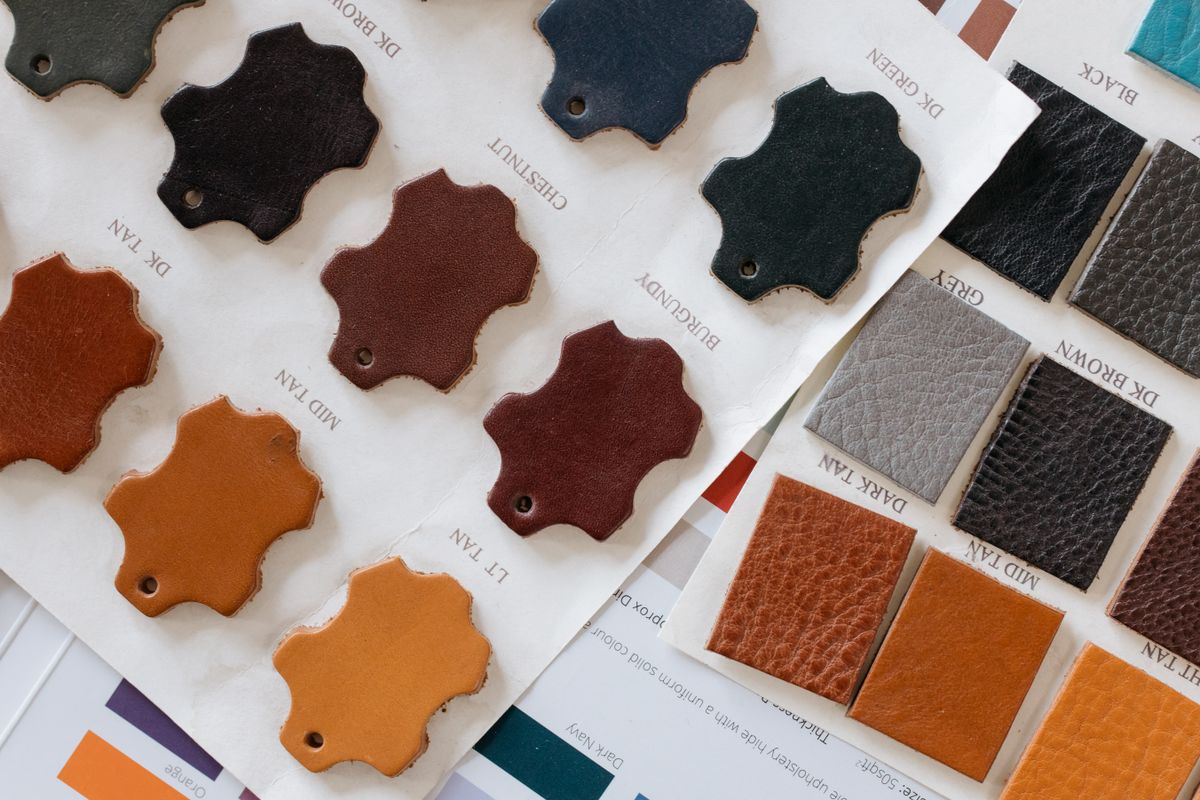
leather color palette shows the wide range dyeing offers
2. How Aniline Dyeing Works
Aniline dye is a translucent color that soaks deep into the hide. The grain stays visible, so every mark and crease shows through.
- Drum dyeing: Hides tumble in a rotating drum with dye.
- Deep color: The dye reaches the center of the hide.
- Natural look: A soft, uneven tone that ages richly.
3. Pigment Finishing vs Dyeing
- Dye: Soaks in, keeps grain natural, softer hand.
- Pigment: Sits on top, hides flaws, even uniform color.
- Combined: Dyed base with a light pigment topcoat.
The more pigment on the surface, the more even the color—and the less of the natural grain you’ll see.
4. Why Dyeing Matters for Buyers
- Aniline: Shows natural beauty, but stains more easily.
- Semi-aniline: A light topcoat adds protection.
- Pigmented: Most durable, most uniform, least natural.
5. How to Care for Colored Leather
- Keep aniline dry—it absorbs water and darkens.
- Condition gently to avoid lifting the color.
- Test products on a hidden spot first.
- Store away from sun to prevent fading.
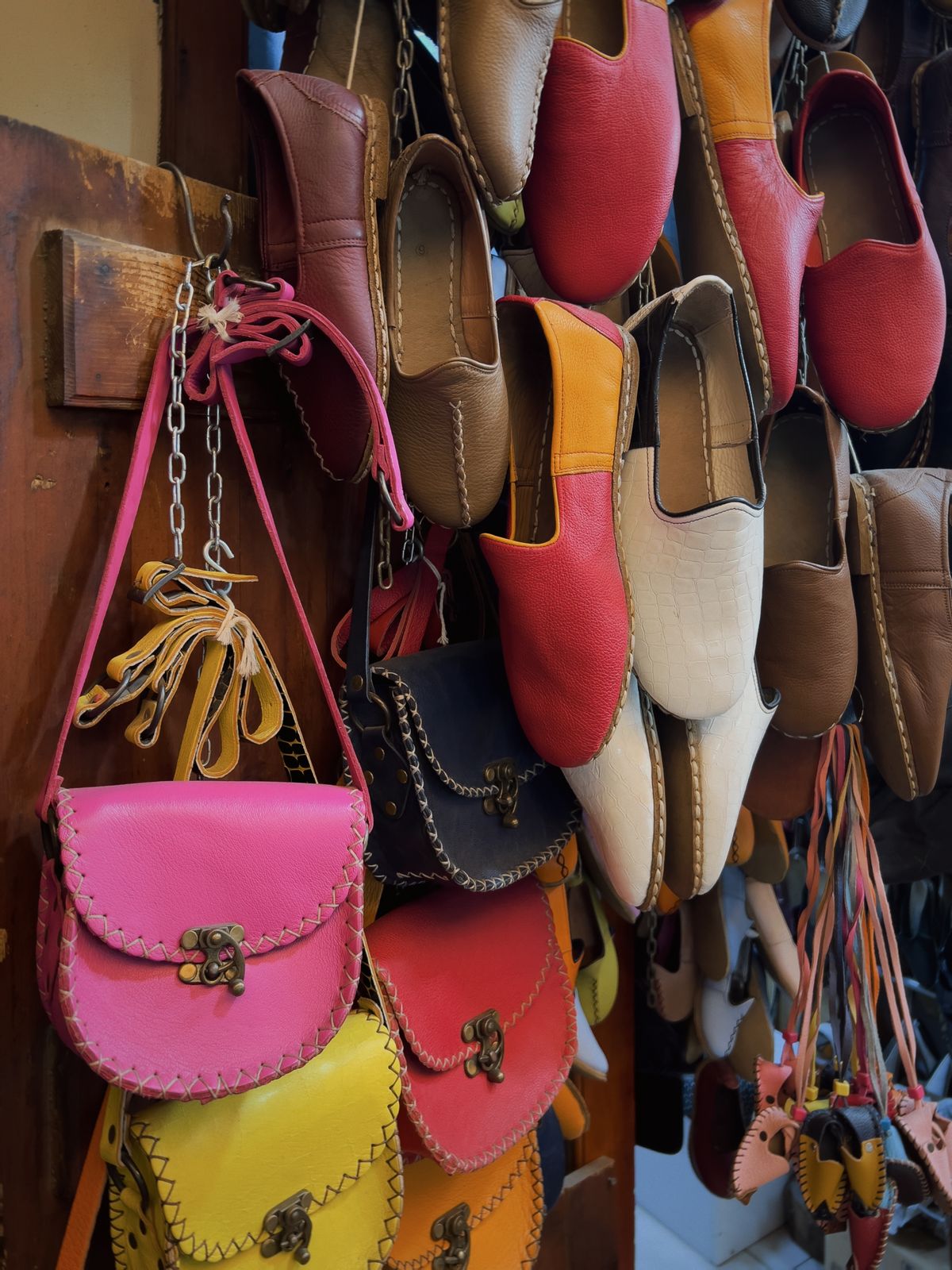
Dyeing lets artisans create vivid colors cowhide never had
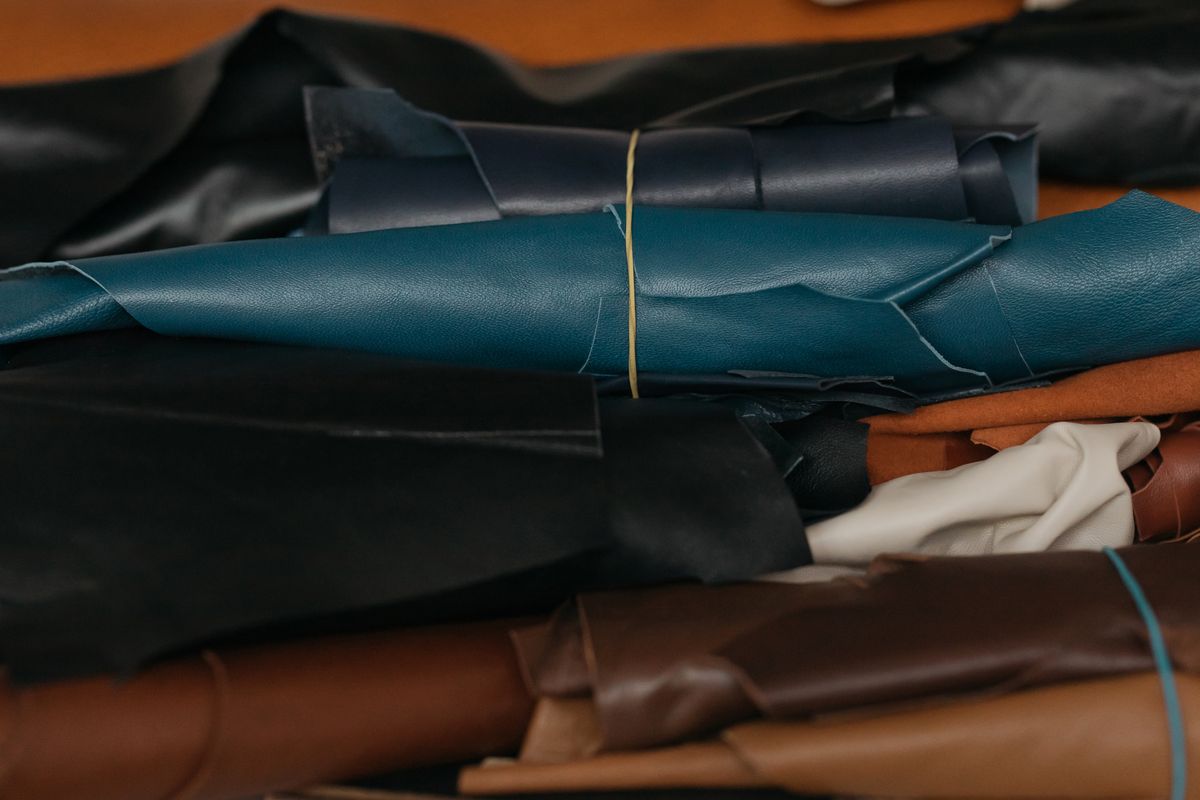
Dyed leather is supplied in rolls in every shade
DUJIANG Tip
Scratch gently—if a lighter tone shows, it’s dyed; if it stays even, it’s pigmented.
At Guangzhou Dujiang, we help brands pick the right dye and finish, balancing beauty, durability, and cost.
Post time: Sep-01-2026


