A leather bag handle does more than make a bag easy to carry. It supports the weight of the bag and its contents, affects carrying comfort, and contributes to the product’s overall appearance. For buyers and brands sourcing leather bags, understanding handle construction can help identify important details that influence everyday performance and long-term usability.
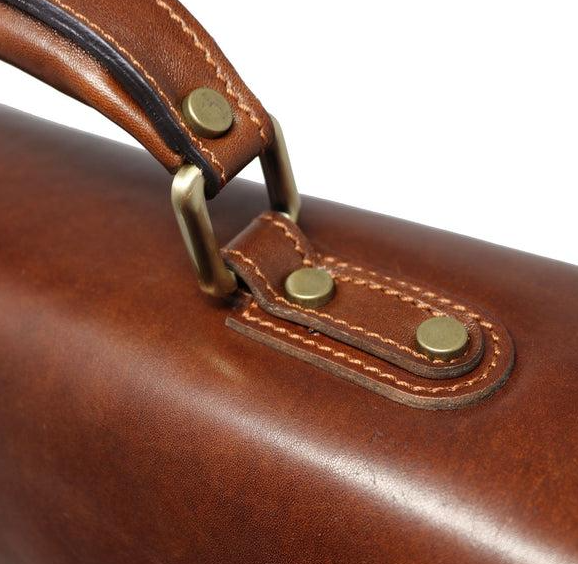
1 Different Types of Leather Bag Handles
Leather bags feature different handle designs depending on their purpose. Short top handles are common on briefcases and structured handbags, while longer shoulder straps provide additional carrying options. Backpacks use adjustable shoulder straps designed to distribute weight across the shoulders.
Each design has different construction requirements. Handle length, width, thickness, and flexibility should match the bag’s intended use and expected load.
2 Why Handle Attachment Matters
The points where handles connect to the bag are especially important because they experience repeated pulling and lifting forces. Depending on the design, handles may be attached using reinforced stitching, folded leather tabs, metal rings, rivets, or a combination of these methods.
A well-designed attachment distributes stress across the surrounding material rather than concentrating it in one small area. The appropriate construction method depends on the bag’s structure, materials, and intended carrying capacity.
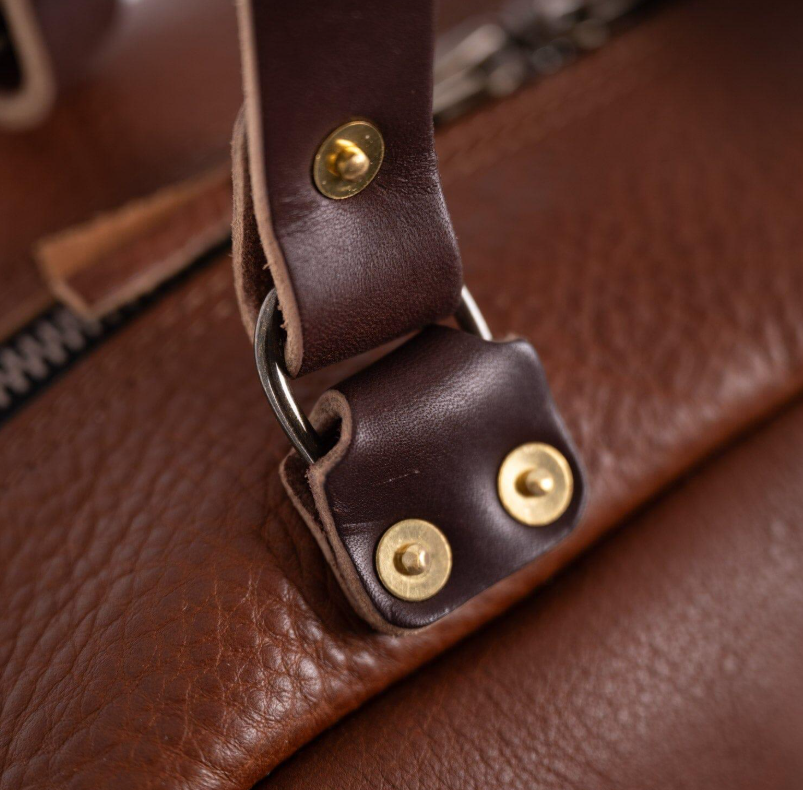
3 Choosing the Right Materials
Handle performance depends on more than the visible leather surface. The thickness and flexibility of the leather, the strength of any internal reinforcement, and the quality of supporting components can all affect durability.
Some handles include reinforcement layers to help maintain their shape under repeated use. Others use softer construction for a more flexible feel. The best choice balances strength, comfort, appearance, and the overall design of the bag.
4 Comfort and Ergonomic Design
A durable handle should also be comfortable to hold or carry. Handle width, thickness, curvature, and spacing can influence how pressure is distributed across the hand or shoulder.
For bags intended to carry laptops, documents, or travel essentials, designers should consider the expected load when selecting handle dimensions and attachment structures. A comfortable design can improve the user experience without compromising the bag’s appearance.
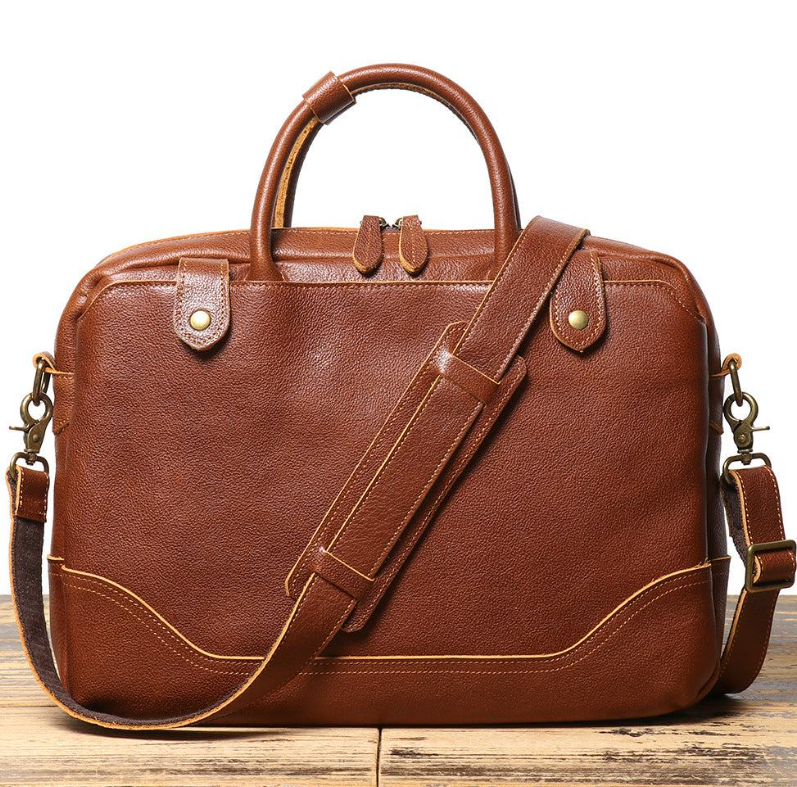
5 How to Inspect Handle Quality
When evaluating a leather bag, examine the handle attachments, stitching, edges, and overall symmetry. Check for loose threads, uneven seams, visible gaps, or signs that the attachment points may be under excessive stress.
Gently handling the bag can help reveal whether the handles feel secure and whether the components move as intended. For bulk orders, manufacturers and buyers can also establish inspection criteria and conduct load testing appropriate to the product’s intended use.
Conclusion
Leather bag handle construction combines material selection, structural reinforcement, attachment techniques, and ergonomic design. Each element contributes to how the bag performs during everyday use.
By paying attention to handle construction and checking critical stress points, buyers and brands can make better-informed decisions when selecting or developing leather bags that balance durability, comfort, and style.
Post time: Oct-26-2026


