A well-made leather bag begins long before the first stitch is sewn. Behind its shape, proportions, and practical details is a carefully developed pattern. Pattern making translates a design concept into measurable components that can be cut, assembled, and reproduced during production.
For leather goods manufacturers and buyers, understanding this process helps explain why pattern accuracy is essential to product consistency.
What Is a Leather Bag Pattern?
A pattern is a technical template used to define the shape and dimensions of each bag component. It may include the front and back panels, side pieces, base, pockets, handles, straps, and other structural parts.
Patterns can be developed using paper templates or digital design tools. Regardless of the method, each piece must correspond accurately with the other components to ensure that the finished bag follows the intended design.
Turning a Design into Measurable Components
A product drawing or reference sample provides the starting point. The pattern maker then determines the dimensions, proportions, seam positions, folding allowances, and connection points required for assembly.
Small adjustments can make a noticeable difference. For example, an incorrectly calculated side panel may affect the bag’s width, while an inaccurate base pattern can make the finished product sit unevenly.
The goal is to translate the visual design into practical production specifications.
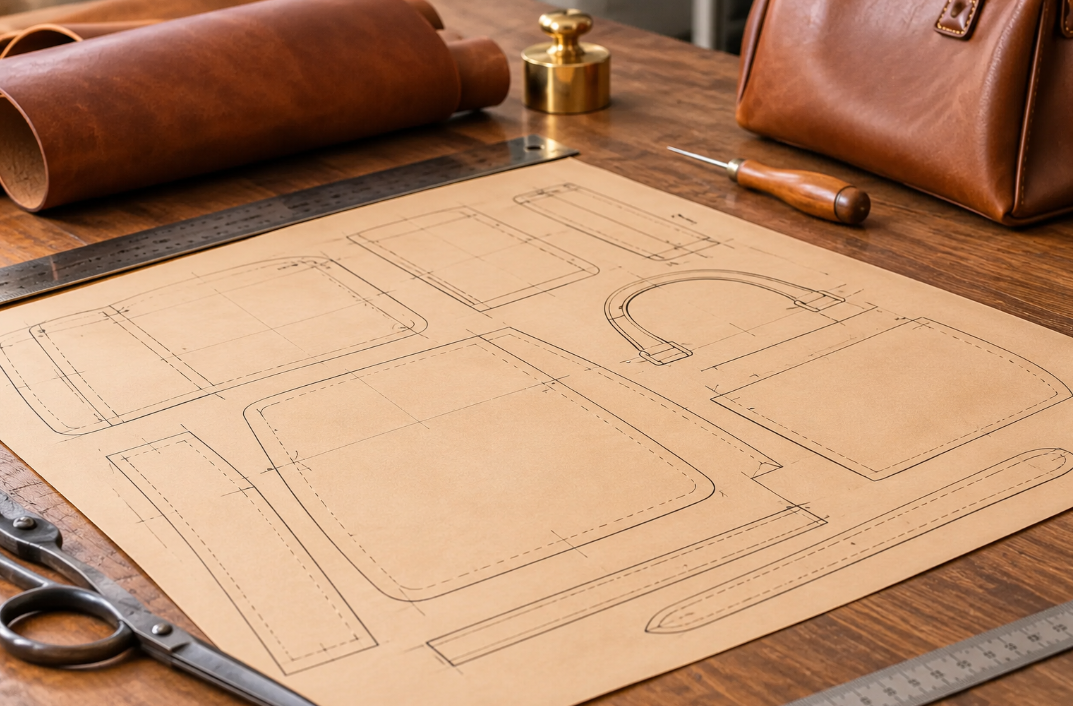
Why Material Thickness Matters
Leather is not a completely uniform material. Its thickness, flexibility, and firmness can influence how individual components fit together.
A pattern designed for relatively soft leather may not produce the same result when used with thicker or firmer material. Folding areas, curved sections, and layered connections may require adjustments to accommodate the selected leather.
Pattern development should therefore consider the actual material intended for production, rather than relying on dimensions alone.
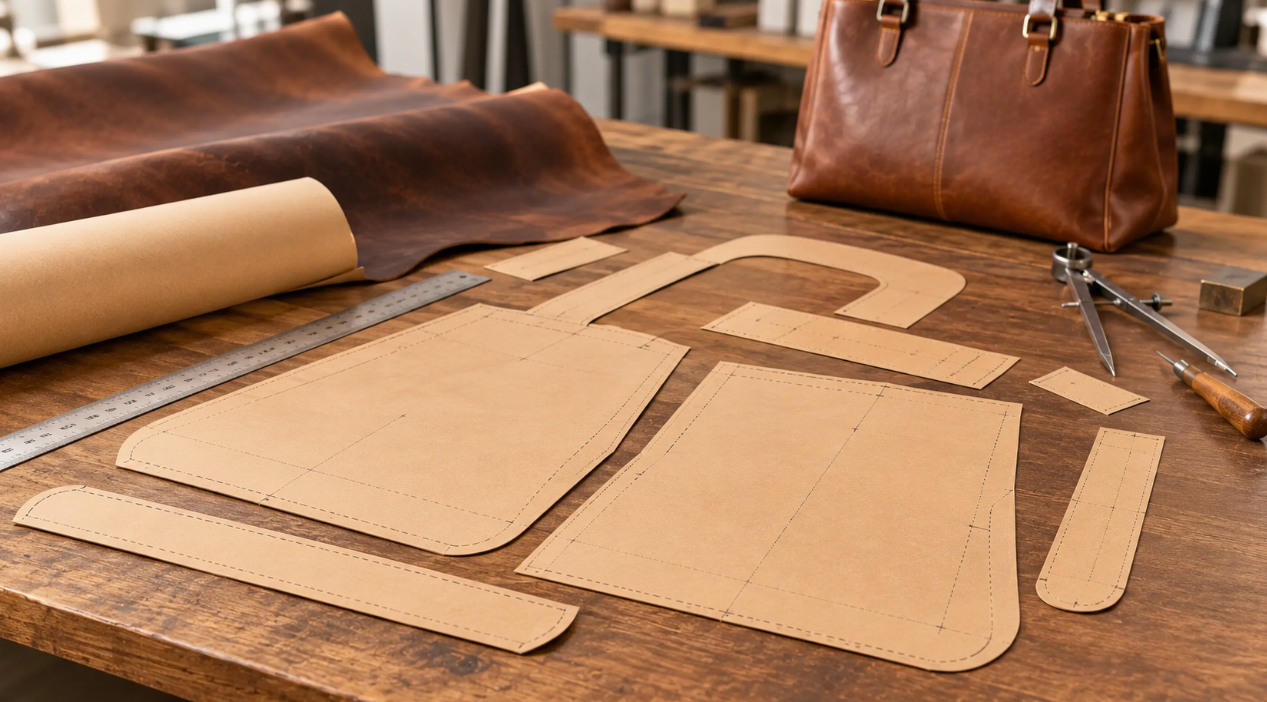
Checking Alignment Between Components
Before mass production, related pattern pieces should be checked for compatibility. Their edges, seam allowances, and reference points need to align during assembly.
Important areas to review include:
- Matching lengths of connecting panels
- Consistent seam allowances
- Accurate pocket and zipper positions
- Balanced left and right components
- Correct placement of handles and attachment points
These checks help reduce assembly difficulties and prevent avoidable differences between finished bags.
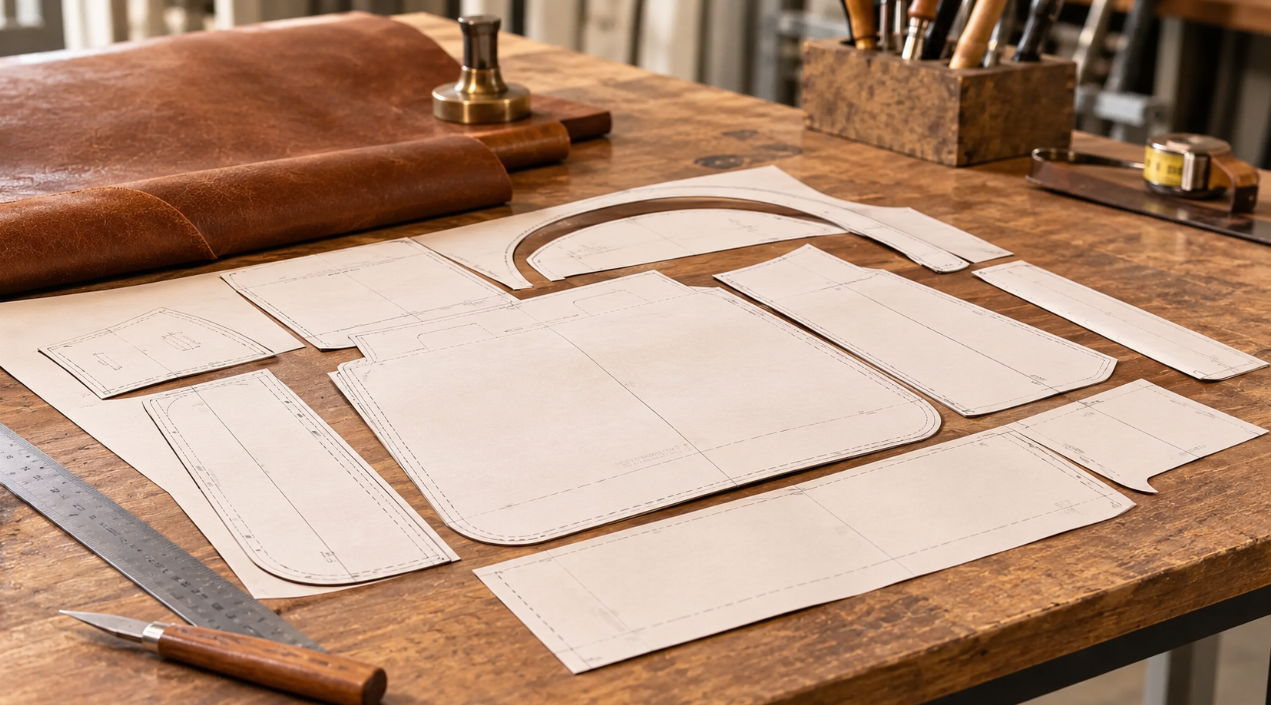
Sample Making and Pattern Adjustment
A production sample is an important opportunity to evaluate the pattern in physical form. Measurements on paper may appear correct, but the assembled bag can reveal issues that are difficult to identify during the design stage.
The sample should be checked for overall dimensions, symmetry, opening shape, internal space, and the positioning of functional details.
If adjustments are needed, the pattern should be revised and the updated version checked again before bulk production begins.
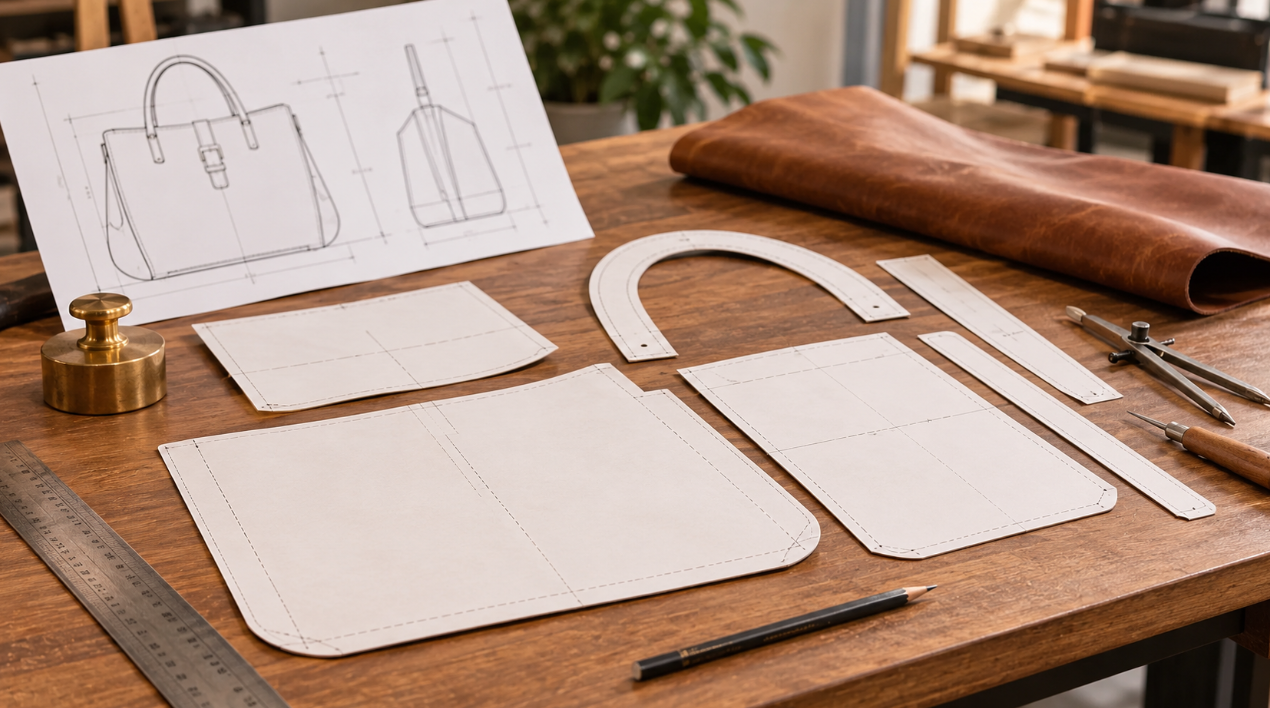
Maintaining Pattern Consistency in Bulk Production
Once a pattern has been approved, it becomes an important reference for production. Clear version control helps ensure that cutting teams and production workers use the correct specifications.
Changes to dimensions, materials, or construction details should be documented. Otherwise, different production batches may follow different pattern versions, resulting in inconsistent products.
For buyers, confirming the approved sample and its corresponding pattern specifications can help establish a clearer production standard.
What Buyers Should Confirm Before Production
When reviewing a leather bag sample, buyers should look beyond its appearance. It is also useful to confirm whether the pattern has been finalized and whether the key dimensions match the approved specifications.
A reliable pattern provides a foundation for repeatable cutting, smoother assembly, and more consistent finished products. It connects product design with practical manufacturing and helps turn an initial concept into a bag that can be produced with greater accuracy.
Post time: Nov-25-2026


