The appearance of a leather bag is shaped by more than its main panels and hardware. Small construction details also influence its overall finish. One example is piping, a narrow covered strip incorporated into selected seams or edges to create a defined outline.
In leather bag manufacturing, piping can add visual definition while helping certain edges maintain a more controlled shape. Understanding how it works can help buyers make better decisions when developing leather bags.
What Is Piping in Leather Bag Construction?
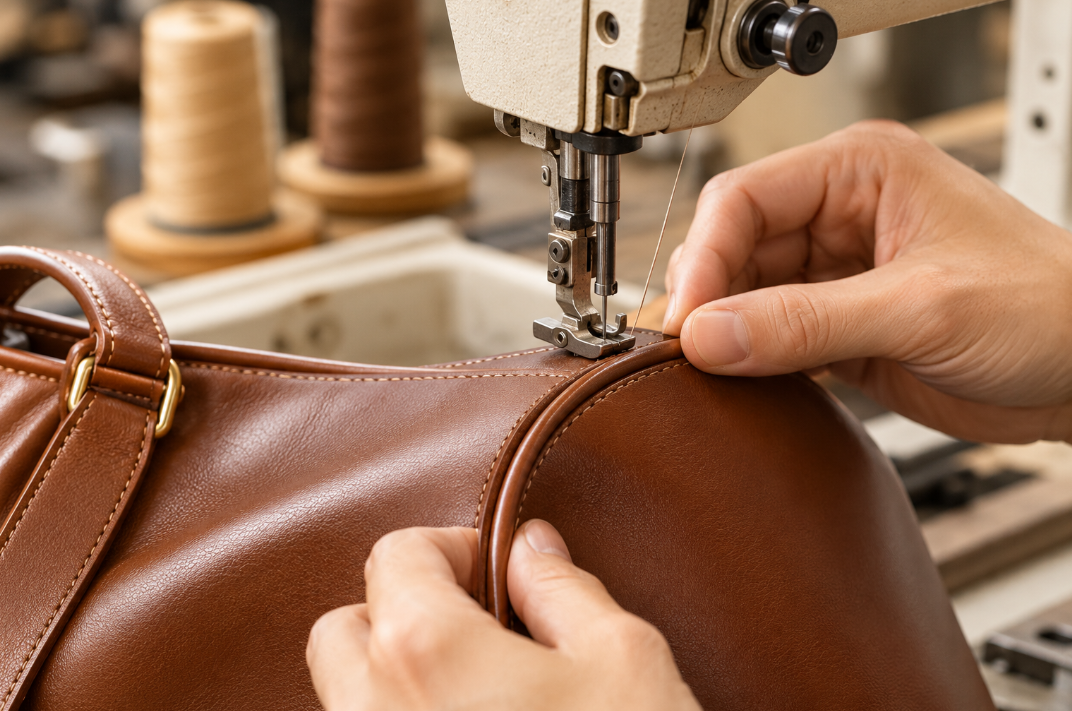
Piping is a narrow strip of material, often wrapped around a cord or flexible core, that is inserted between two panels or along a selected edge.
Once sewn into the construction, the raised line creates a clear outline around the bag’s shape. Depending on the design, piping may be made from matching leather, contrasting leather, or another suitable material.
It is commonly used around bag panels, pockets, flaps, and selected structural seams.
Why Do Manufacturers Use Piping?
Piping serves both decorative and construction purposes.
Visually, it creates a defined border that can highlight the shape of a bag. A matching leather piping gives a subtle, coordinated appearance, while a contrasting color can make the outline more noticeable.
From a construction perspective, piping can help define the edge between adjoining panels and create a more consistent finished profile. However, it should not be treated as a substitute for proper structural reinforcement or accurate stitching.
Choosing the Right Piping Material
The material used for piping should work well with the bag’s leather, design, and intended use.
Leather piping can provide a coordinated appearance and a similar surface texture to the main body. It may be selected from the same leather or a complementary material.
A fabric-covered cord can be suitable for certain designs, depending on the desired flexibility and finish.
The core also matters. Its diameter and firmness influence how prominent the piping looks and how easily it follows straight or curved edges.
Piping Around Curves and Corners
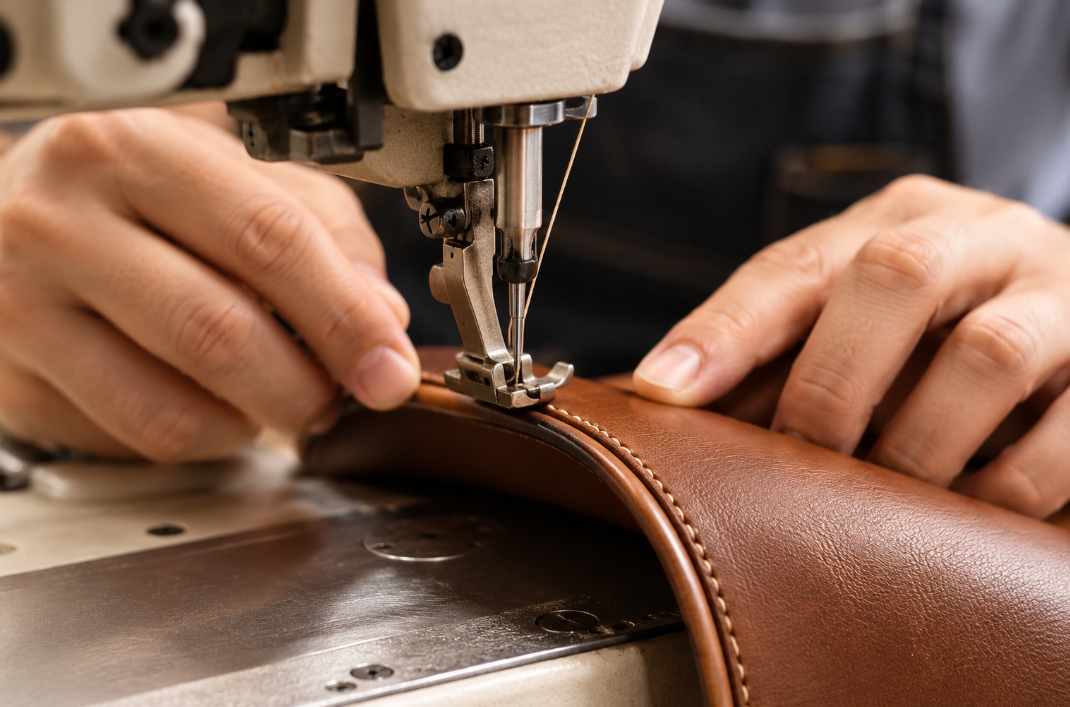
Straight edges are generally easier to finish than curved sections. When piping follows a rounded corner or a curved panel, the material must be positioned carefully to avoid twisting, uneven spacing, or visible gathers.
The cord size, outer covering, seam allowance, and sewing method all influence the final result.
For tighter curves, the construction may require adjustments to the piping material or pattern. A sample is useful for checking whether the finished outline follows the intended shape smoothly.
How Piping Affects the Finished Appearance
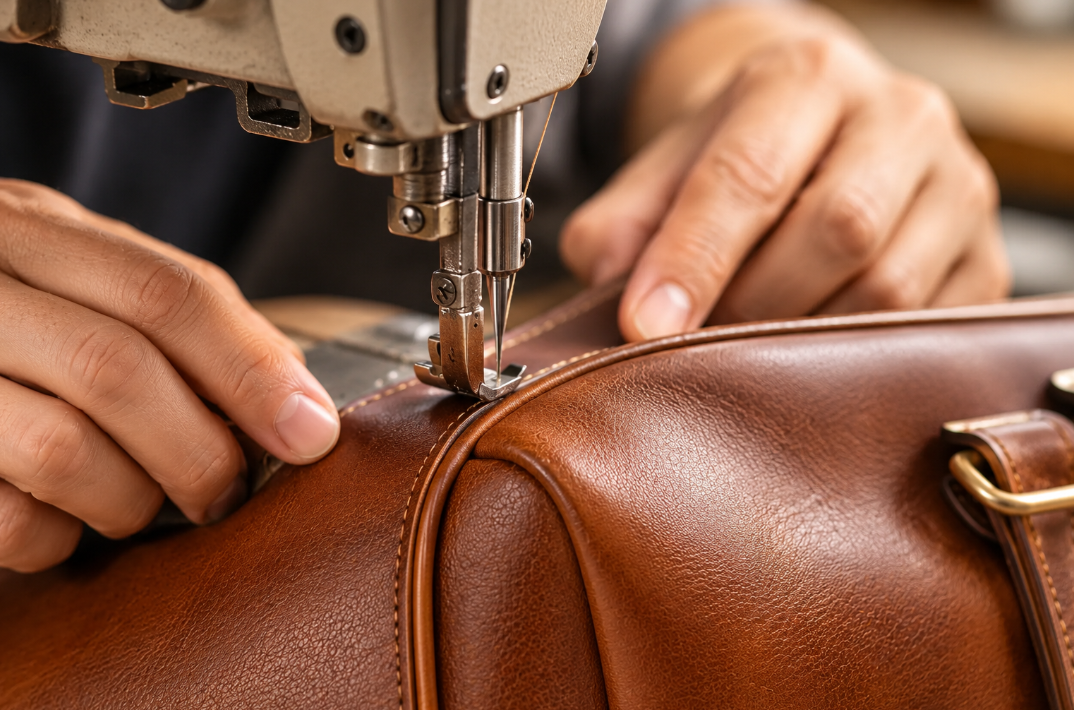
Well-executed piping creates a neat and continuous outline. Its thickness, color, and placement can change the visual character of a bag.
For example, narrow piping may produce a subtle border suitable for minimalist designs. More prominent piping can emphasize the structure of briefcases, travel bags, or other styles with defined silhouettes.
The finish should remain consistent around the entire section. Uneven thickness, exposed core material, loose stitching, or abrupt joins can make the product look poorly finished.
What Buyers Should Check During Sample Inspection
When reviewing a leather bag sample, buyers should inspect both the appearance and construction of the piping. Key points include:
- • Whether the piping width remains consistent
- • Whether the cord is fully covered
- • Whether stitching follows the edge evenly
- • Whether curved sections appear smooth without twisting or puckering
- • Whether the piping joins are neat and discreet
- • Whether the material and color match the approved design
It is also useful to check whether the piping feels appropriate for the bag’s overall structure rather than being excessively stiff or bulky.
Matching Piping to the Bag Design
Not every leather bag needs piping. Its use should support the product’s intended appearance and construction.
A structured business bag may benefit from clearly defined panel edges, while a soft casual bag may require a more flexible and understated treatment. The choice of material, cord size, and placement should be considered during product development and sample evaluation.
At DUJIANG, construction details such as edge finishing, panel connections, and material selection are important considerations in leather bag development. Careful coordination of these elements helps create products with a balanced appearance and consistent workmanship.
Post time: Nov-27-2026


