A well-designed leather bag should offer more than an attractive appearance. Its pocket layout plays an important role in everyday convenience, helping users organize personal belongings and access frequently used items. Whether designed for business, travel, or casual use, the right combination of interior and exterior pockets can make a leather bag more practical and comfortable to carry.
The Importance of Pocket Layout
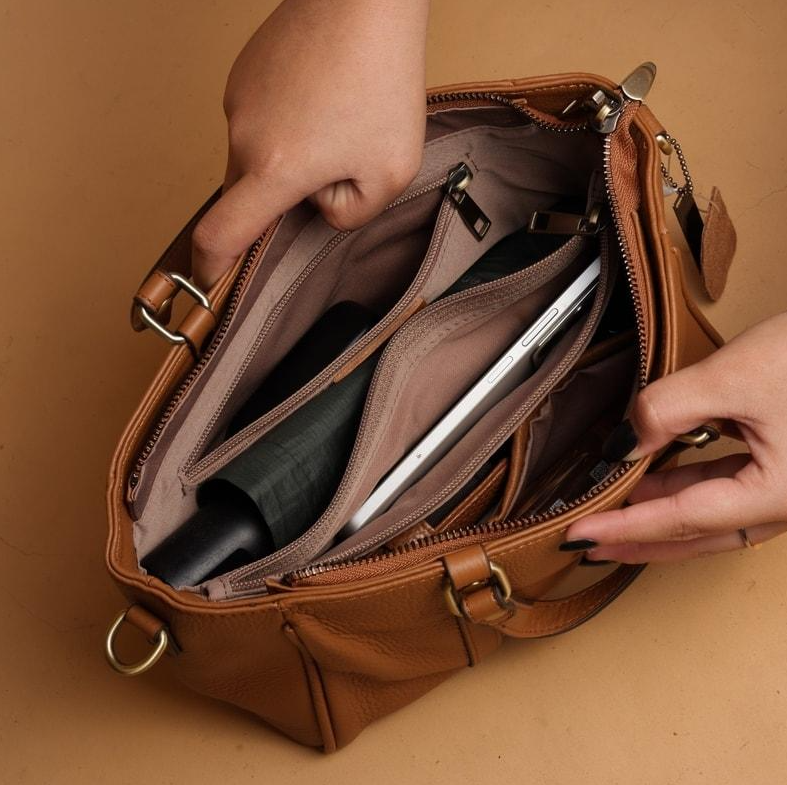
Pocket layout determines how efficiently users can organize their belongings. A thoughtfully designed interior can separate everyday essentials such as phones, wallets, keys, documents, and small accessories.
Instead of simply adding more pockets, manufacturers should consider the size, position, and accessibility of each compartment. A practical layout helps prevent items from becoming mixed together and makes better use of the available space.
Interior Pockets for Better Organization
Interior pockets are commonly used to store smaller or more valuable personal items. Zippered pockets provide additional closure, while open slip pockets allow users to retrieve frequently used belongings quickly.
For business bags, dedicated sections for documents, notebooks, and electronic accessories can improve organization. For smaller handbags, compact pockets can help keep essential items within easy reach without taking up too much space.
Exterior Pockets for Easy Access
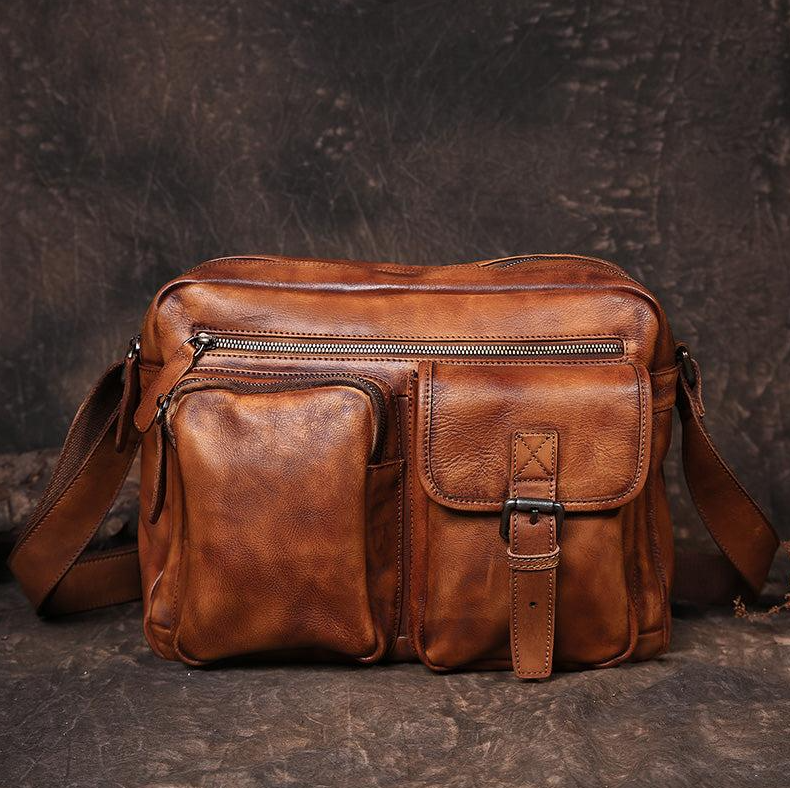
Exterior pockets are designed for items that users may need to access frequently without opening the main compartment. They are particularly useful on backpacks, messenger bags, and travel bags.
Front pockets can provide convenient storage for small accessories, while side pockets may be suitable for items such as water bottles, depending on the bag’s design. Back pockets can offer discreet storage for selected personal belongings.
The placement of exterior pockets should complement the bag’s overall appearance and should not interfere with comfortable carrying.
Matching Pocket Design to Different Bag Styles
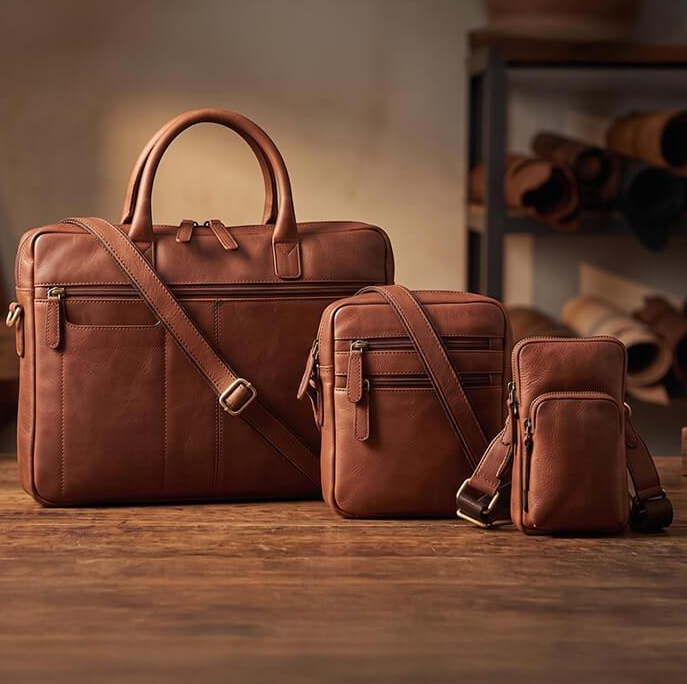
Different bag categories require different storage solutions. Business briefcases often benefit from organized interior sections for documents and electronic devices. Backpacks may use multiple compartments to separate work essentials and personal belongings.
Crossbody bags generally benefit from compact, accessible pockets, while travel bags may require additional storage areas for accessories and frequently used items.
The best pocket configuration depends on the target customer, intended use, bag dimensions, and overall design.
What Buyers Should Check When Evaluating Pockets
When inspecting a leather bag, consider the number, dimensions, and accessibility of its pockets. Check whether pocket openings are properly finished and whether their stitching is secure.
Also consider the thickness of the materials used between compartments. Excessive internal layers may reduce usable storage space or make the bag unnecessarily bulky.
For custom bag development, buyers should confirm the pocket layout through product drawings or physical samples before bulk production. This helps ensure that the final design meets practical requirements.
Conclusion
Pocket design is an important part of leather bag functionality. Well-planned interior and exterior compartments improve organization, accessibility, and the overall user experience.
By matching pocket placement and dimensions to the intended purpose of a bag, manufacturers and brands can create products that combine practical storage with attractive design.
Post time: Oct-30-2026


