In leather bag manufacturing, small details can make a significant difference to the final product. One important process is skiving, which involves thinning selected areas of leather to make them easier to fold, layer, and assemble.
Although it is not always visible on a finished bag, proper skiving helps manufacturers manage material thickness and achieve cleaner construction. Understanding this process can help buyers evaluate the quality of leather goods more effectively.
1 What Is Leather Skiving?
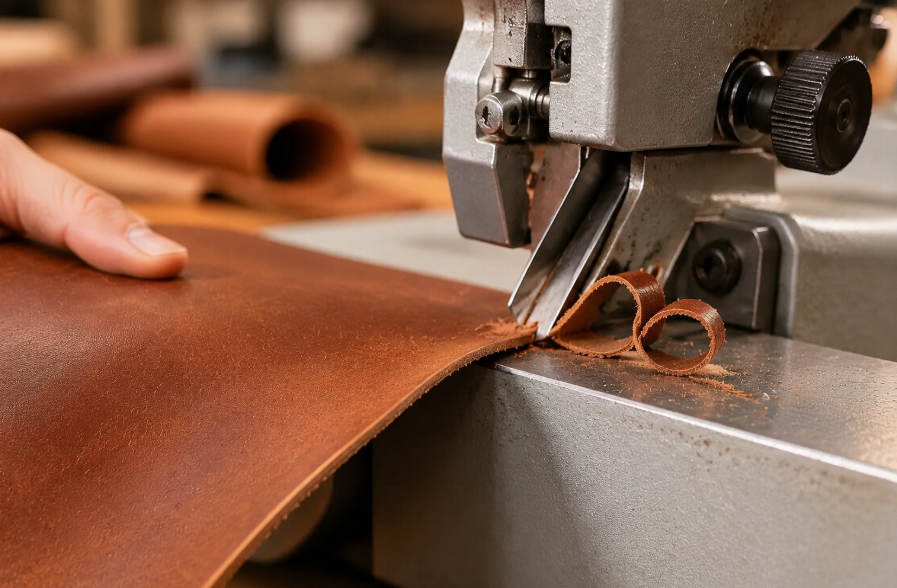
Leather skiving is the process of reducing the thickness of leather in specific areas. It is usually performed with a specialized skiving machine or suitable hand tools.
Unlike cutting a leather piece to a smaller shape, skiving removes material from the thickness of the leather. The treated area becomes thinner while the surrounding section can retain its original thickness.
The amount and position of skiving depend on the leather, product design, and construction method.
2 Why Is Skiving Important in Bag Manufacturing?
Leather components often need to be folded, overlapped, or joined together. When several thick layers meet, the finished area can become bulky and difficult to assemble.
Skiving helps reduce unnecessary thickness at selected points. This can make folded edges neater, improve the fit between connected components, and help reduce bulky seams.
It is particularly useful for products with multiple leather layers or carefully finished edges.
3 Common Areas That Require Skiving
Skiving is not necessarily applied to every part of a leather bag. It is usually concentrated in areas where the material needs to be folded or layered. Common examples include:
- Folded edges: Thinning the edge can make it easier to turn leather inward for a cleaner finish.
- Handle attachments: Selected sections may be thinned to help layered components fit together.
- Strap ends: Skiving can reduce bulk where leather is folded around a buckle or other fitting.
- Overlapping panels: Reducing thickness at joining areas can help create a more balanced construction.
- Decorative folded details: Thinning may help achieve a smoother profile around shaped or curved sections.
The appropriate treatment depends on the design and the required strength of each component.
4 Why Skiving Thickness Must Be Controlled
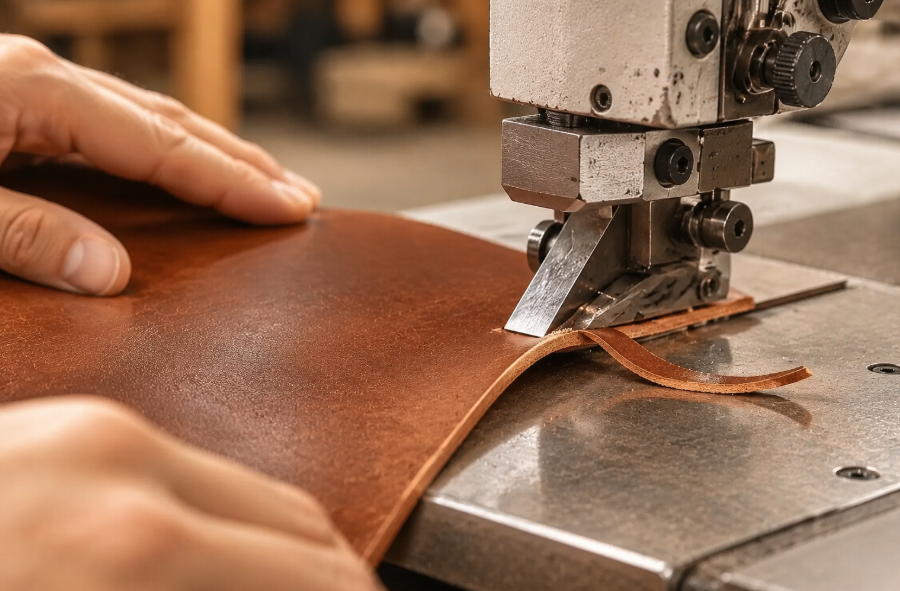
Reducing too much material can weaken a leather component, especially in areas that carry weight or experience repeated movement.
Leaving too much thickness, on the other hand, may make folding difficult and create uneven layers.
For this reason, skiving should be adjusted according to the leather’s original thickness, firmness, and intended function. Structural areas such as load-bearing attachments require particular attention. They should not be thinned simply to achieve a flatter appearance.
Consistent thickness control is important for both product appearance and practical performance.
5 How Skiving Affects the Finished Appearance
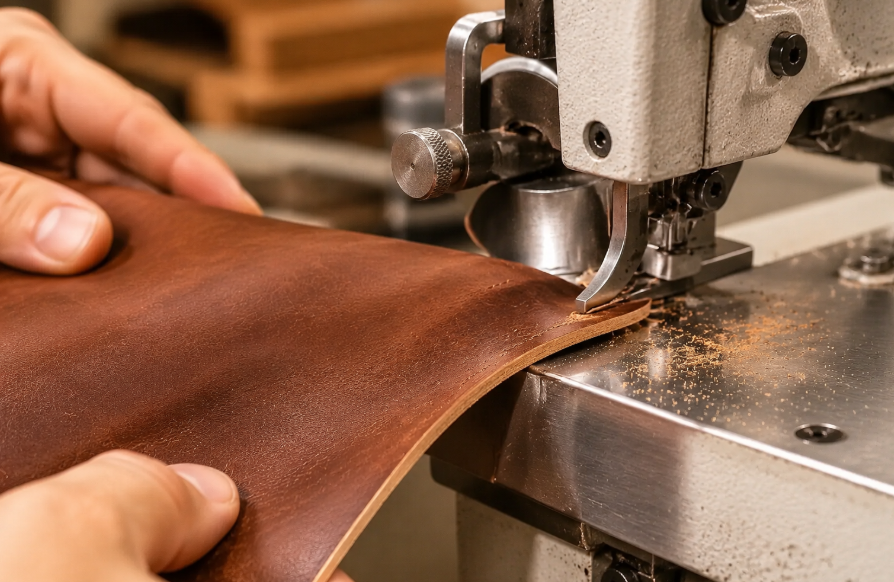
Well-controlled skiving can contribute to a more refined finish. Folded edges may appear less bulky, layered sections can sit more evenly, and certain seams can have a cleaner profile.
However, skiving alone does not determine the quality of a finished bag. It works together with accurate cutting, suitable adhesives, precise stitching, and proper assembly.
A well-designed construction method considers all these processes rather than relying on one technique.
6 What Buyers Should Check During Sample Inspection
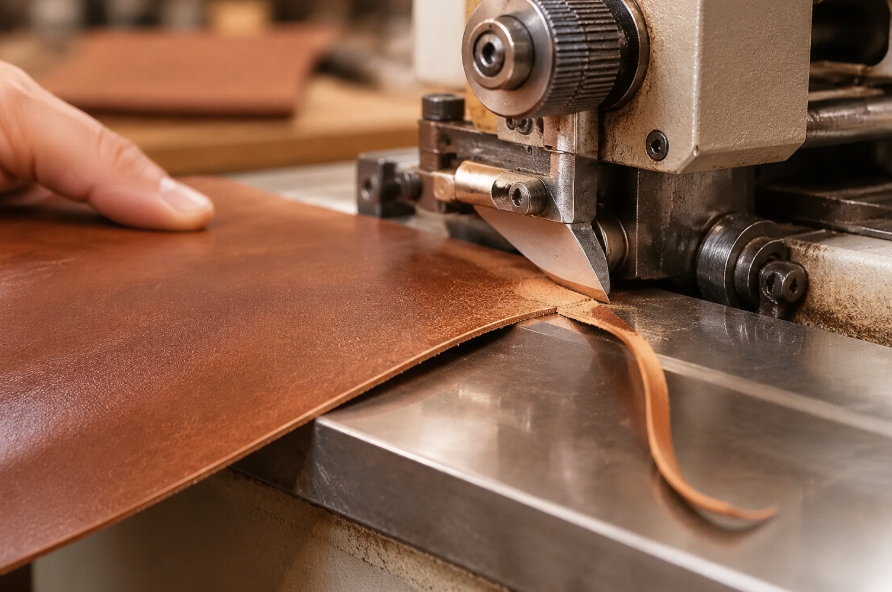
When reviewing a leather bag sample, buyers can examine areas where several layers meet or where leather has been folded. Useful points to check include:
- [✓] Whether folded edges look even and consistent
- [✓] Whether layered sections appear unnecessarily thick
- [✓] Whether there are visible cuts or rough transitions in thinned areas
- [✓] Whether attachment points retain sufficient material
- [✓] Whether the finished shape matches the approved sample
These details can provide useful insight into the manufacturer’s material preparation and construction control.
7 Matching Skiving to the Product Design
Different leather bag styles require different construction approaches. A soft leather tote, a structured briefcase, and a compact wallet may use different skiving positions and thickness settings.
The goal is not to make every leather component as thin as possible. It is to remove only the material needed to support the intended construction while preserving strength where it matters.
At DUJIANG, understanding how leather thickness, folding, and component assembly work together is an important part of leather bag development. Careful material preparation helps create products with balanced construction, neat details, and consistent production quality.
Post time: Nov-26-2026


