When choosing leather for a bag or leather accessory, buyers often focus on color, texture, and thickness. Another important detail is the direction of the leather grain. Understanding grain direction can help manufacturers make better decisions when cutting and constructing leather products.
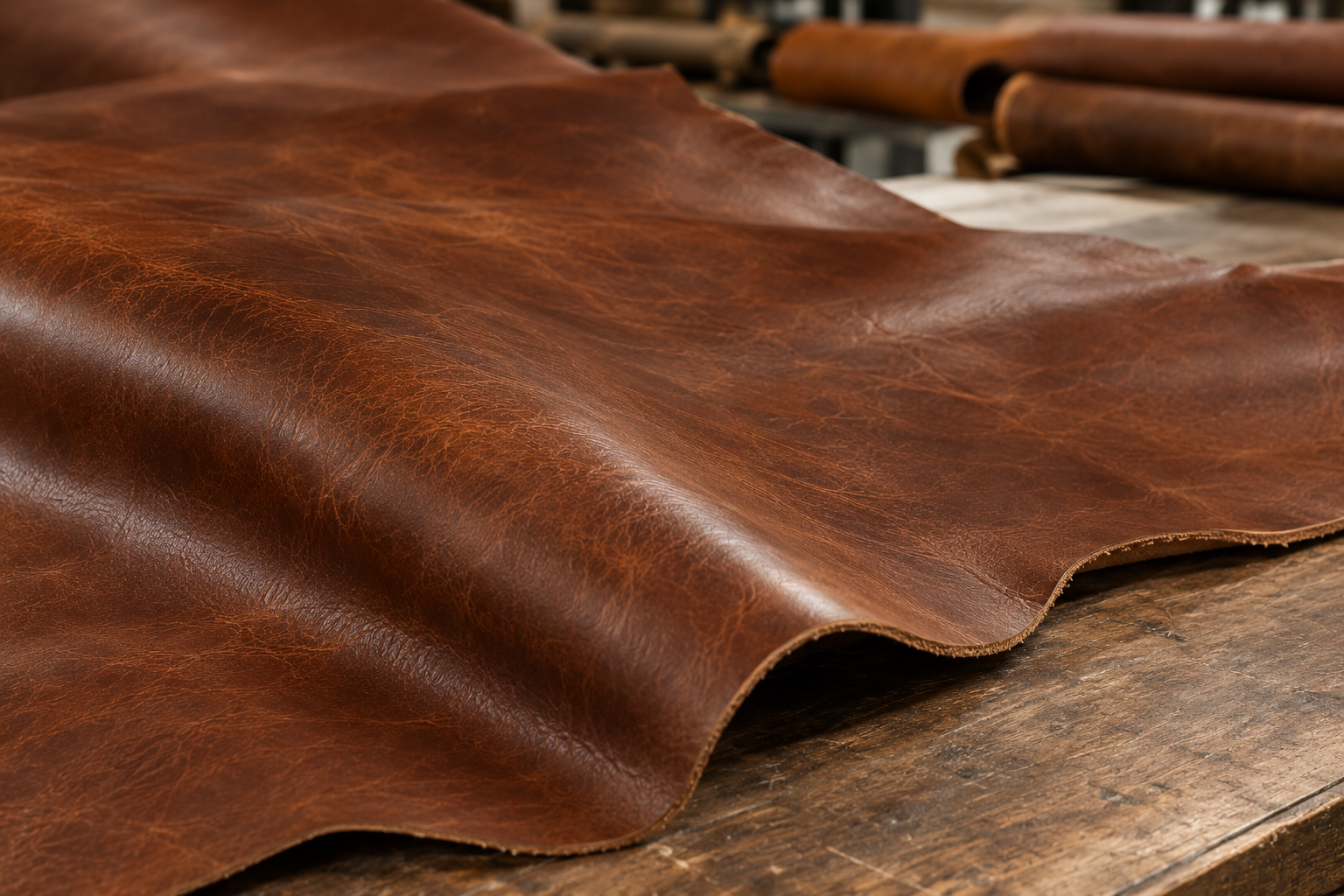
1. What Is Leather Grain Direction?
Leather has a natural fiber structure that runs through the hide. Although it is not as uniform as woven fabric, the direction and characteristics of these fibers can influence how a piece of leather stretches, bends, and holds its shape.
This is why different areas of a hide may behave differently during production.
2. Why Does Grain Direction Matter?
Grain direction can affect how leather responds to daily use.
For example, areas that need to maintain their shape may require careful positioning of leather pieces. Handles, straps, panels, and other stressed components also need to be considered during cutting and construction.
Proper material placement can help create a more consistent final product.
3. Grain Direction and Leather Cutting
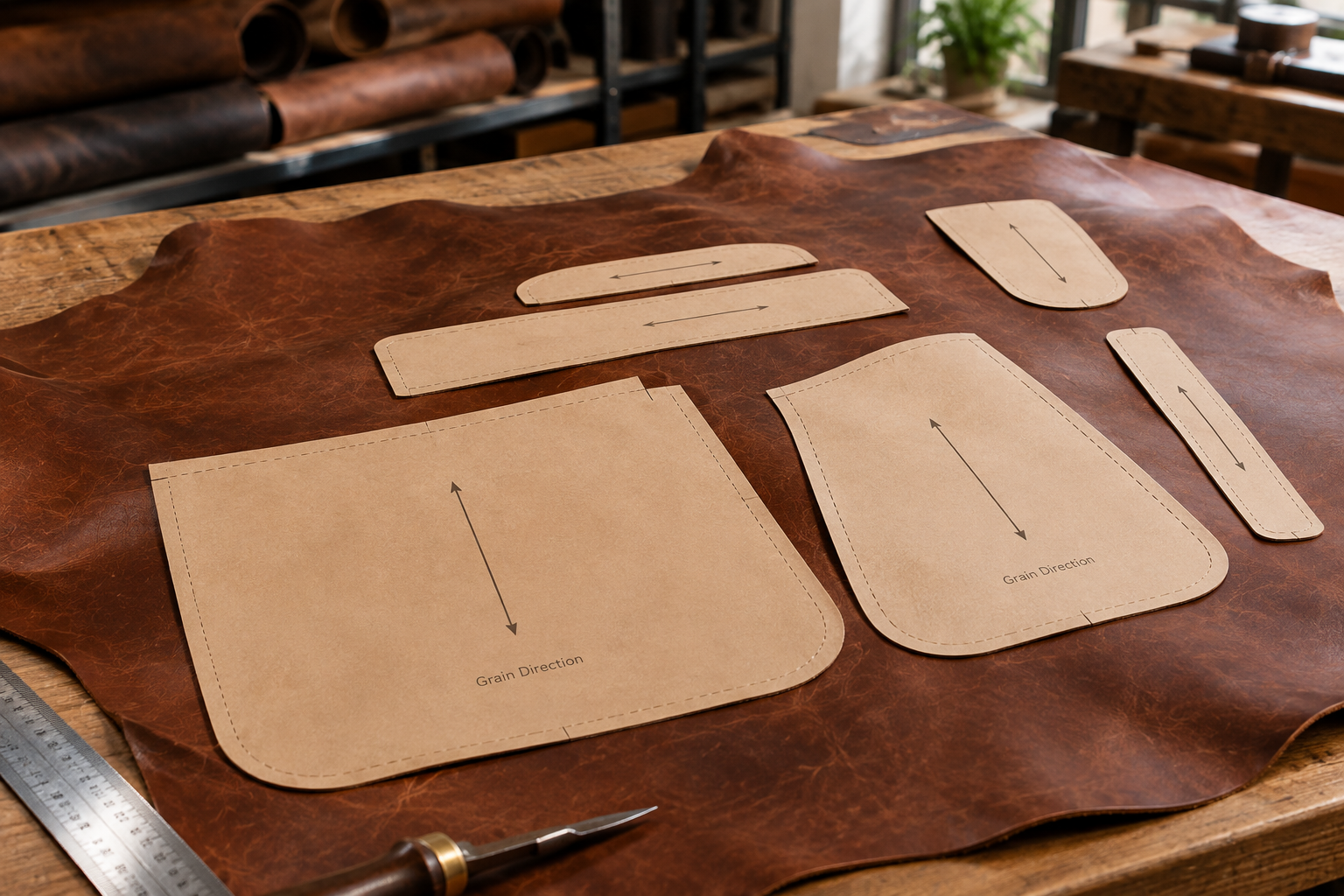
When preparing leather for production, manufacturers need to consider both the shape of each pattern and the characteristics of the hide.
Experienced cutting teams arrange patterns carefully to make effective use of the material while selecting suitable areas for important product components.
This helps balance material efficiency, appearance, and product performance.
4. Does Grain Direction Affect Every Product?
The importance of grain direction varies depending on the product.
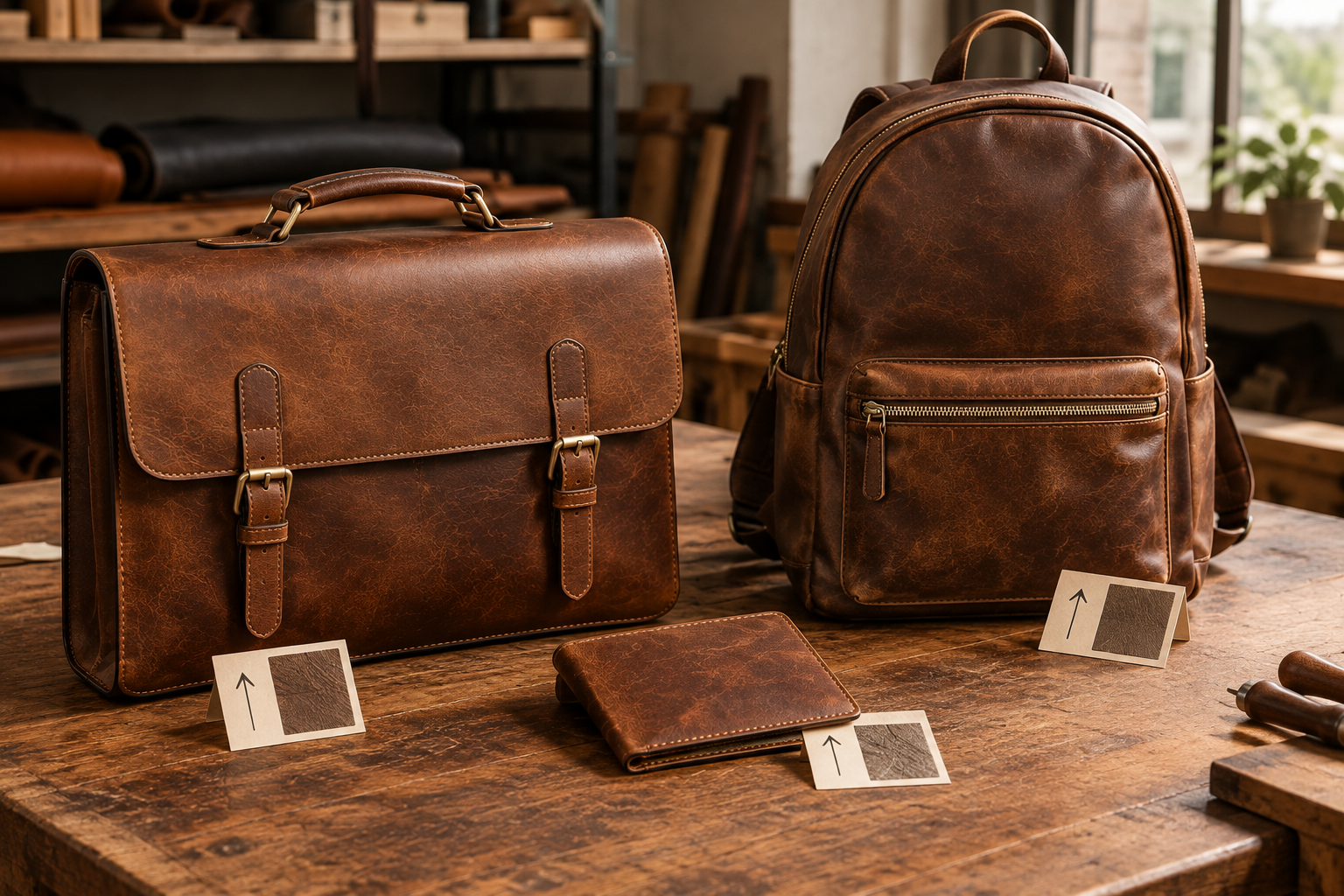
A structured briefcase, backpack, or leather strap may require more careful consideration than a small decorative accessory. Product construction, leather type, thickness, and intended use all influence the final cutting approach.
There is no single cutting direction that works for every leather product.
Conclusion
Leather is a natural material, and understanding its structure is an important part of good leather craftsmanship.
By considering grain direction during material selection and cutting, manufacturers can better match the characteristics of the leather with the requirements of each product, helping create leather goods with consistent quality, appearance, and performance.
Post time: Sep-12-2026


