A leather bag may look simple from the outside, but many areas experience repeated pulling, bending, and pressure during everyday use. Reinforcement is an important part of leather goods construction because it helps strengthen these high-stress areas and improve the overall durability of the product.
1. What Is Leather Reinforcement?
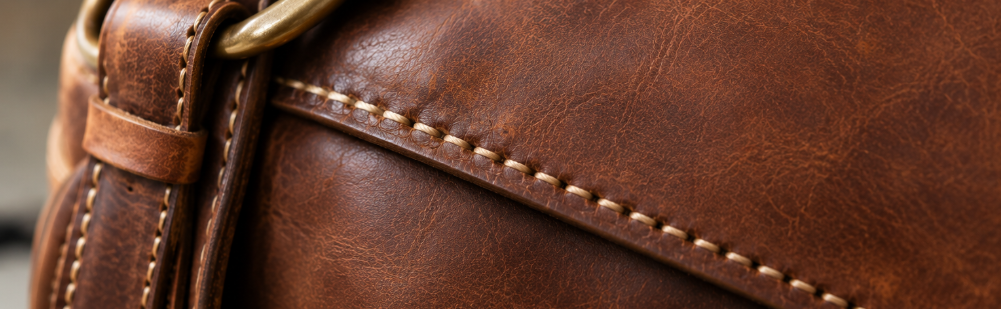
Leather reinforcement refers to adding extra material, stitching, or structural support to specific areas of a leather product.
Common reinforcement areas include handles, shoulder strap attachments, corners, pockets, and other points that experience frequent movement or weight.
2. Why Do Stress Points Need Reinforcement?
Not every part of a leather bag receives the same amount of pressure.
For example, a handle may carry the full weight of a bag, while a shoulder strap attachment is repeatedly pulled during daily use. Without suitable reinforcement, these areas may become loose or damaged over time.
Additional support helps distribute pressure and reduce stress on a single section of leather.
3. Common Reinforcement Methods
Different products require different reinforcement methods.
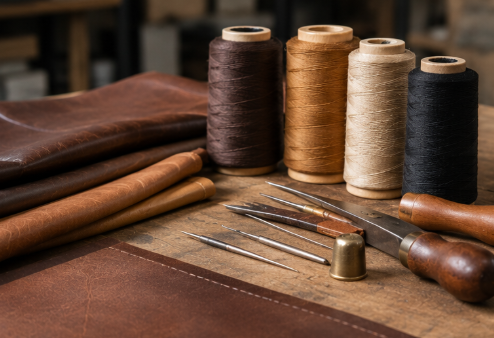
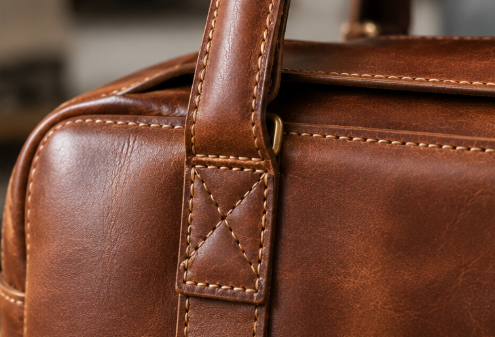
Manufacturers may use additional leather layers, reinforced stitching, folded leather sections, or carefully positioned support pieces. For strap connections, cross stitching or multiple rows of stitching can help improve stability.
The method should be selected according to the product structure, leather characteristics, and expected use.
4. How Can Buyers Check Reinforcement Quality?
When evaluating a leather product, pay close attention to the areas that carry weight or experience frequent movement.
Check whether handles are securely attached, stitching is even, and stress points have sufficient support. Reinforcement should look integrated with the overall design rather than appearing as an unnecessary addition.
Conclusion
Reinforcement is often hidden from view, but it plays an important role in the long-term performance of leather goods.
By giving extra attention to handles, straps, corners, and other high-stress areas, manufacturers can create leather products that are more stable, reliable, and suitable for everyday use.
Post time: Sep-17-2026


