When choosing leather goods, most buyers focus on leather type, color, and appearance. But there is another important factor that is often overlooked: leather thickness. The thickness of leather can influence a product’s structure, weight, flexibility, and overall feel.
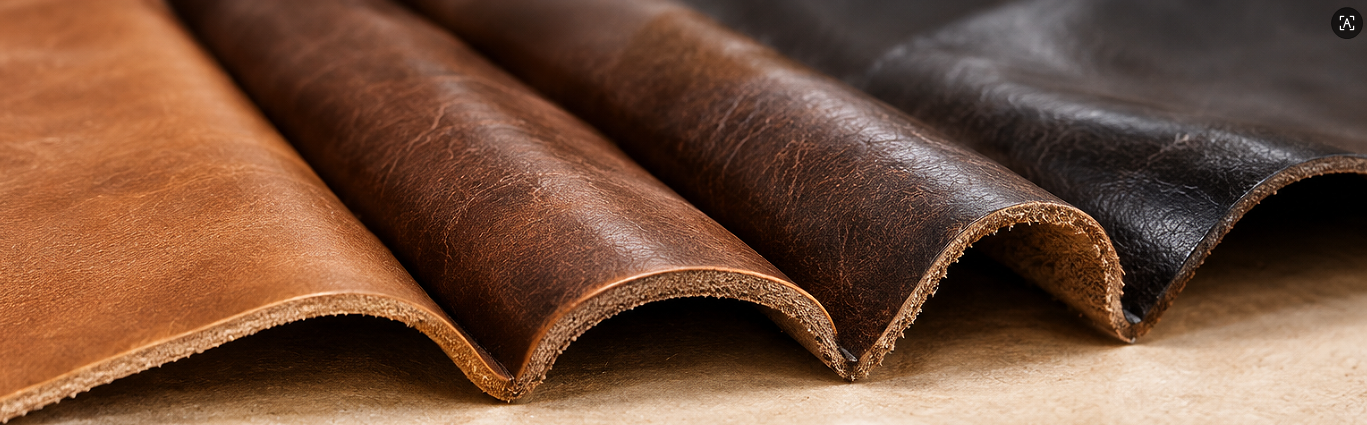
What Does Leather Thickness Mean?
Leather thickness refers to the distance between the two surfaces of a leather piece, usually measured in millimeters (mm). Different products require different thicknesses depending on their design and intended use.
Thicker leather generally provides more structure and strength, while thinner leather offers greater flexibility and a lighter feel.
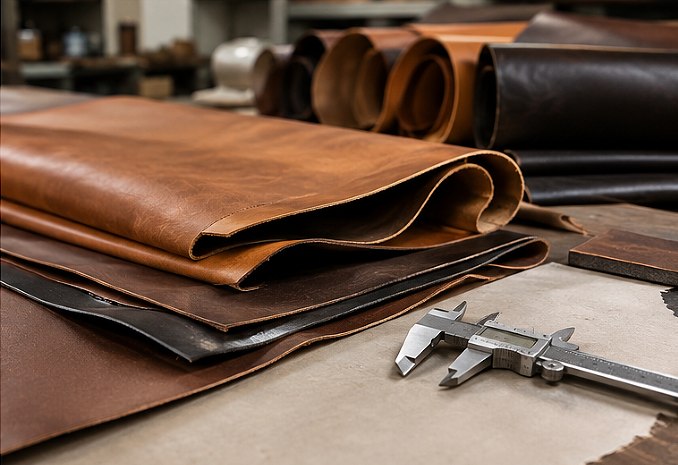
Why Does Thickness Matter?
The right thickness helps a leather product perform as intended.
For example, a structured briefcase or backpack may benefit from firmer leather that can maintain its shape. Wallets and small accessories often require thinner leather so they remain compact and easy to carry.
For bags, thickness also affects how the leather folds, how seams hold their shape, and how the product feels in daily use.
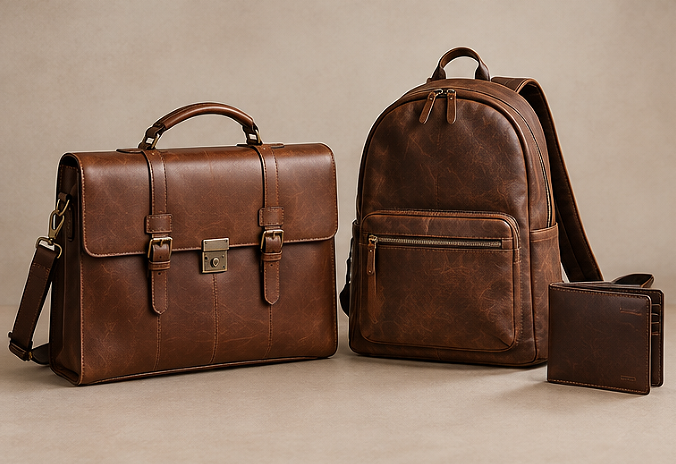
Thickness Should Match the Product
There is no single “best” leather thickness for every product.
A practical leather bag may need a balance between durability and flexibility, while a small leather accessory may prioritize softness and portability. Designers and manufacturers therefore consider the product structure, stitching method, hardware, and intended use before selecting the appropriate leather thickness.
How to Choose the Right Thickness
When developing or sourcing leather products, consider three factors: the product’s structure, its expected daily use, and the desired hand feel.
The right thickness should support the design without making the product unnecessarily heavy or rigid.
Conclusion
Leather quality is not determined by thickness alone. The best results come from matching the leather’s thickness with its construction, purpose, and overall design.
At DUJIANG Leather, material selection is considered together with product structure and manufacturing requirements, helping create leather goods that balance durability, functionality, and comfort.
Post time: Sep-07-2026


