The bottom of a leather bag experiences frequent contact with desks, floors, and other surfaces. Over time, this contact can cause scratches, scuff marks, and changes in shape. For brands and buyers, understanding bottom protection is important when developing leather bags that need to maintain their appearance through regular use.
1 Why the Bag Bottom Needs Protection
The base is one of the areas most exposed to friction and pressure. When a bag is placed on the ground or a hard surface, its bottom may come into contact with dust, moisture, and rough materials.
Without suitable construction, repeated contact can lead to visible wear or deformation. The level of protection required depends on the bag’s size, intended load, materials, and expected use.
2 The Role of Base Panels
A base panel provides additional support to the bottom of a bag. It may be made from leather, reinforced fabric, or suitable supporting materials, depending on the product design.
A properly designed base panel can help the bag maintain its shape and distribute the weight of its contents. For larger bags, the panel may also work together with internal reinforcement to provide greater stability.
The material and thickness should be selected according to the bag’s structure rather than added without considering flexibility and overall weight.
3 Metal Bag Feet and Their Function
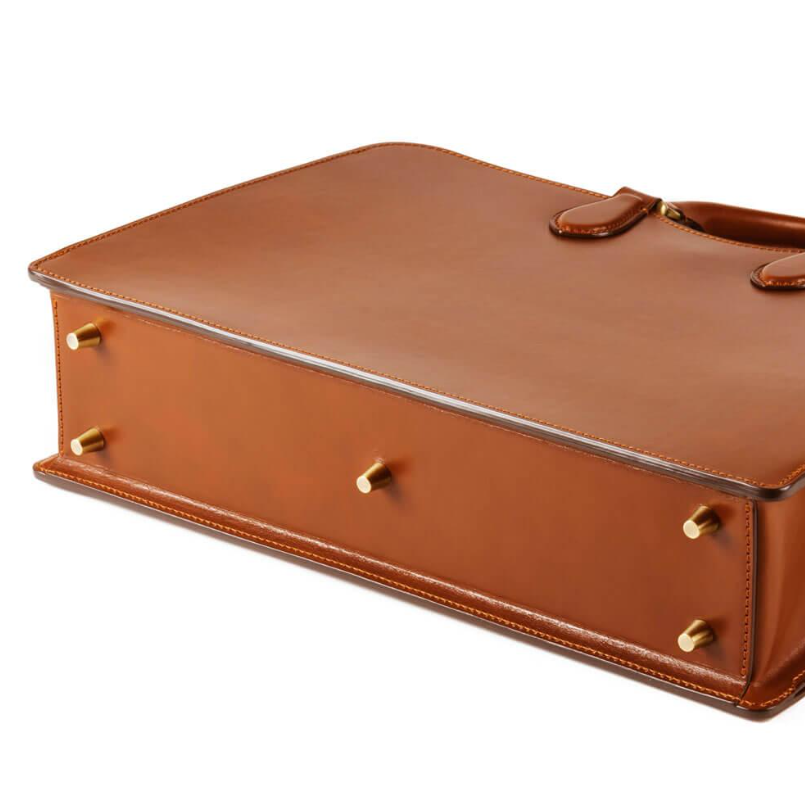
Metal feet are small hardware components attached to the bottom of some bags. They create a gap between the leather base and the surface on which the bag is placed.
Common designs include rounded studs, flat feet, and small protective fittings. Their shape, size, finish, and placement should complement the bag’s appearance while providing practical support.
Metal feet are often used on structured handbags, briefcases, and travel bags, although they are not necessary for every style.
4 Placement and Attachment Considerations
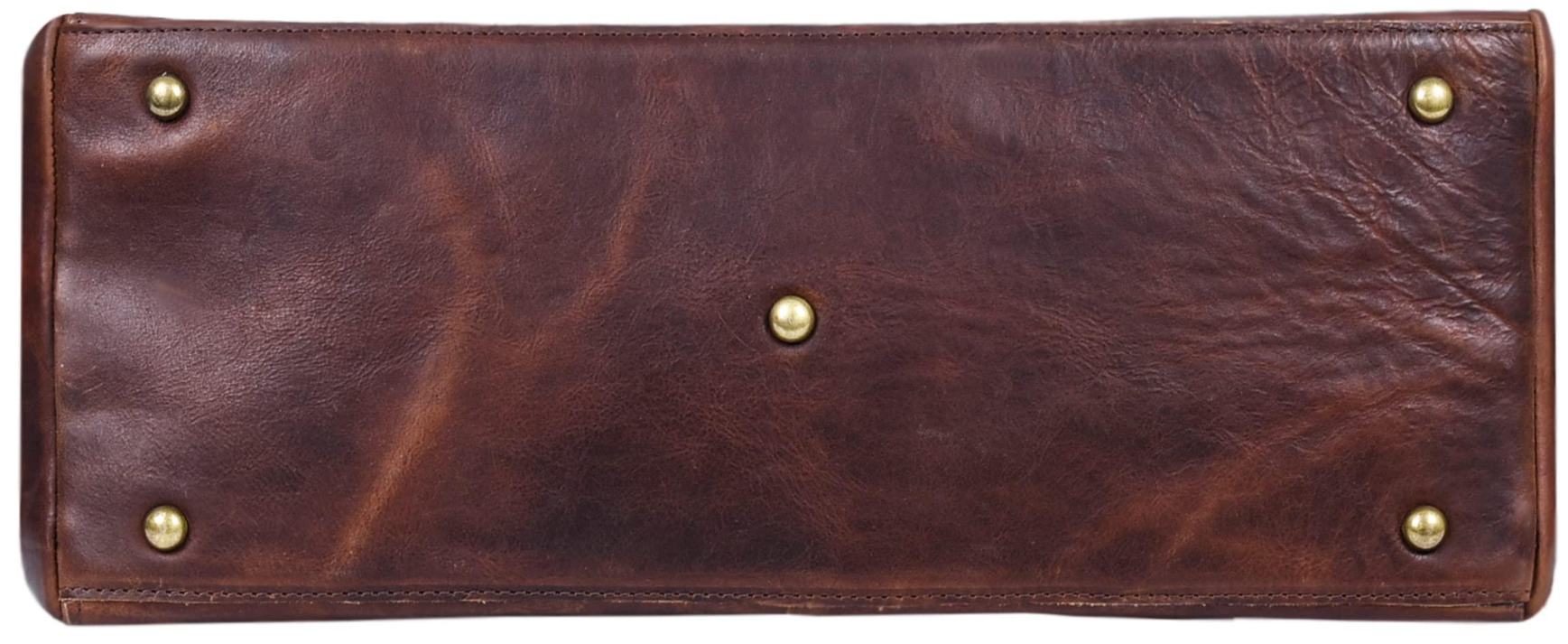
The position of metal feet affects how a bag rests on a flat surface. They should be arranged to provide balanced support and avoid making the bag unstable.
The attachment method also matters. Hardware should be securely fixed, and the surrounding leather should be properly supported to reduce the risk of loosening or damage during use.
For bags with flexible or soft bases, the design may require additional reinforcement before metal feet are added.
5 What Buyers Should Check
When evaluating a leather bag’s bottom construction, buyers should inspect:
- • Base stability: Check whether the bag stands as intended when placed on a flat surface.
- • Material protection: Review the base panel and any reinforcement used.
- • Hardware attachment: Make sure metal feet are firmly installed and evenly positioned.
- • Surface finishing: Look for scratches, uneven edges, or visible damage around the fittings.
- • Practical clearance: Confirm that the feet provide suitable separation between the leather base and the supporting surface.
These checks can help identify construction issues before bulk production.
6 Matching Bottom Protection to the Bag Style
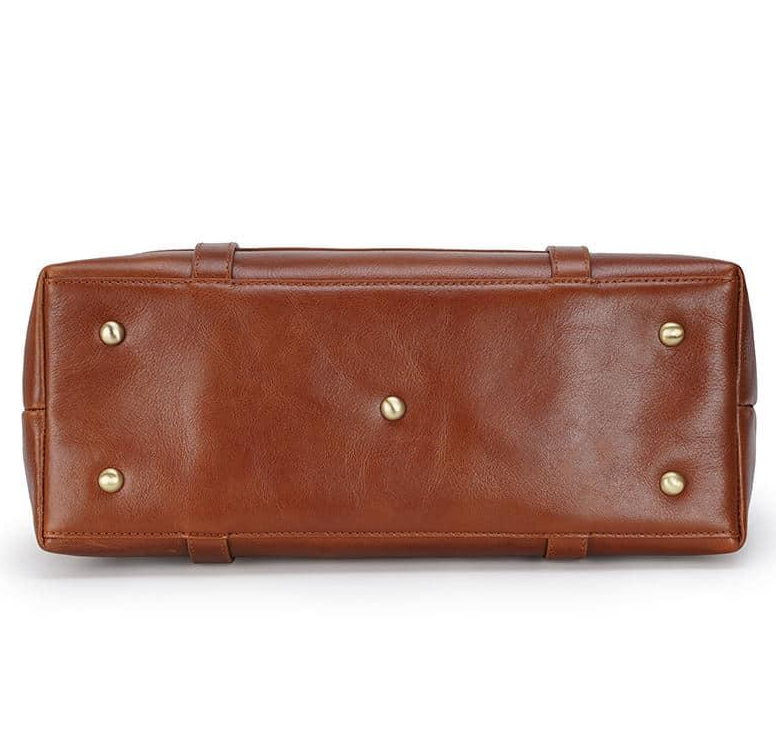
Different products require different levels of bottom protection. A structured briefcase may benefit from a firm base panel and metal feet, while a soft everyday tote may prioritize flexibility and a lighter construction.
Travel bags and larger carry bags may need additional support because they are more likely to carry heavier contents. The final design should balance protection, weight, appearance, and cost.
Bottom protection is a practical detail that can influence the long-term appearance and usability of a leather bag. By choosing suitable base materials, reinforcement, and hardware, manufacturers can create products that are better prepared for everyday handling.
Post time: Nov-18-2026


